Antibiotics and Your Dog’s Gut: Supporting Digestion During and After a Course of Treatment

Antibiotics are among the most important medicines in veterinary practice. They clear skin infections, treat urinary problems, manage wounds and save the lives of dogs with serious bacterial illness. But anyone who has nursed a dog through a course of antibiotics knows that they often come with a side effect nobody wanted: loose stools, wind, a rumbling stomach and sometimes a dog that goes off its food. It is one of the most common reasons owners ring the practice a few days into treatment.
The reason is simple. Antibiotics are designed to kill bacteria, and they are not selective about which ones. While they tackle the infection, they also reduce the population of beneficial bacteria living in the dog’s intestines, disrupting the balance that keeps digestion running smoothly. In most dogs this disruption is temporary and the gut recovers over the following weeks, but during that period the dog can be uncomfortable, and in some cases the imbalance lingers.
This article explains what antibiotics do to the gut, why some dogs are affected more than others, how to support your dog’s digestion during and after treatment, and where products such as Probiotic Dog Treats fit in. It also sets out clearly, for UK owners, the difference between a feed product that supports normal gut function and a medicine, and why you should never stop or alter a course of antibiotics without speaking to your vet.
What Antibiotics Do to the Gut Microbiome
A healthy dog’s intestines are home to an enormous, diverse community of bacteria. They ferment fibre the dog cannot digest, produce short-chain fatty acids that feed the cells lining the colon, help synthesise certain vitamins, interact constantly with the immune tissue in the gut wall and, by simply occupying space and consuming resources, make it harder for unwanted organisms to gain a foothold. This community is called the microbiome, and its balance is a major factor in digestive comfort.
Antibiotics, particularly broad-spectrum ones that act on many types of bacteria, reduce this community sharply. Research in dogs has shown that even a short course can measurably lower bacterial diversity, and that it can take weeks, and in some individuals months, for the microbiome to return to something close to its previous state. During that period the gut has fewer of the bacteria that produce beneficial fatty acids, fermentation becomes erratic, gas production may rise, and the colon may draw in more water, producing soft or watery stools. Opportunistic organisms, including certain yeasts and less desirable bacteria, can multiply in the space left behind.
Some antibiotics also irritate the stomach lining directly, causing nausea, drooling and vomiting, especially if given on an empty stomach. Your vet or the medicine leaflet will say whether a particular product should be given with food.
Why Some Dogs Are Hit Harder
Not every dog on antibiotics develops digestive upset. Those most likely to do so include dogs on longer courses or repeated courses, dogs on broad-spectrum antibiotics or combinations of drugs, puppies whose microbiome is still developing, elderly dogs with less reserve, dogs with a history of sensitive digestion or inflammatory bowel conditions, and dogs already under stress from the illness being treated, a hospital stay or a change in routine. Dogs whose diet is being changed at the same time, for example to a recovery or veterinary diet, face a double disruption.
It is also worth remembering that the illness itself, not just the medicine, can upset the gut. A dog being treated for an infection may be feverish, in pain, eating less and drinking more, all of which affect digestion. Sorting out which factor is responsible is often less useful than simply supporting the gut through the whole episode.
Never Stop the Course Without Advice
The most important message in this article is that antibiotics must be given exactly as prescribed, for the full duration, even if your dog seems better and even if its stools are loose. Stopping early or missing doses risks the infection returning and contributes to antibiotic resistance, which is a serious and growing problem in both human and veterinary medicine. Antibiotics are prescription-only veterinary medicines in the UK, regulated by the Veterinary Medicines Directorate, and only a vet can prescribe them, change the dose or decide to switch to a different drug.
If your dog develops diarrhoea or vomiting during treatment, telephone the practice. They may advise giving the tablets with food, adjusting timing, prescribing something to protect the stomach, or in some cases changing the antibiotic. They will not want you to make those decisions alone. Contact them straight away if vomiting means the dog cannot keep tablets down, if diarrhoea is severe or bloody, if the dog is lethargic or refusing water, or if the original condition seems to be getting worse.
Supporting the Gut During Treatment
With the medical side firmly in the vet’s hands, there is still plenty an owner can do. Feed the dog’s normal diet, and resist the temptation to switch foods or offer rich human food to tempt a reduced appetite, because a diet change on top of antibiotics compounds the disruption. If your dog is off its food, offer smaller meals more often, warm wet food slightly to release aroma, and hand-feed if necessary. Give tablets with a meal unless the vet has said otherwise.
Keep fresh water available at all times and watch how much your dog is drinking, since diarrhoea increases fluid loss. Cut out all treats other than those you would normally give, and avoid fatty scraps entirely. Keep exercise gentle, particularly if the dog is recovering from surgery or illness, and maintain as calm and predictable a routine as you can, because stress adds to the load on the gut.
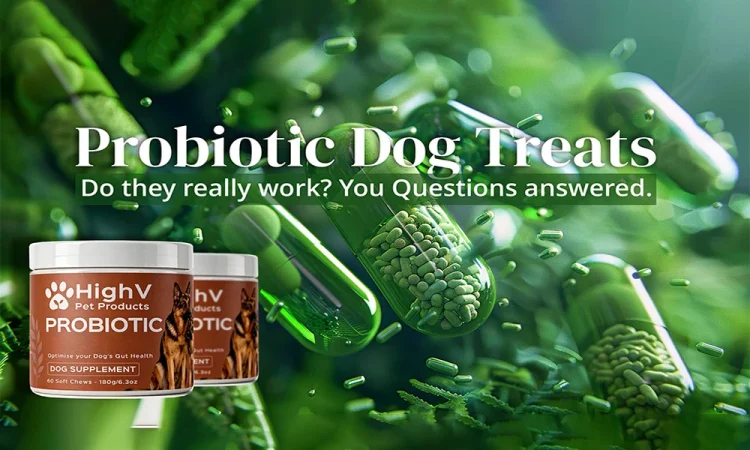
Many vets now discuss probiotic support alongside antibiotics, and many owners choose to include a probiotic in the routine during and after a course. In the UK, probiotics fed to dogs are regulated as feed additives in the gut flora stabiliser category, and only authorised strains may be used. The most common authorised strain in dog products is a specific strain of Enterococcus faecium, and some products use authorised Bacillus or Lactobacillus strains. Probiotic treats package these authorised organisms in a palatable, easy-to-feed format that fits naturally into a daily routine, which is helpful when a dog is already being asked to accept tablets.
What Probiotic Treats Can and Cannot Do
This is where UK owners need to be clear-eyed. A probiotic treat is a complementary pet food, regulated under feed law. It is not a veterinary medicine and holds no marketing authorisation from the VMD. That means it cannot legally claim to treat, cure or prevent antibiotic-associated diarrhoea or any other condition, and a responsibly labelled product will not do so. What it can say is that it supports normal digestive function or helps to maintain a balanced gut flora. Owners should expect exactly that: a supportive, everyday contribution to the gut environment, not a remedy.
Used within those limits, feeding a probiotic treat daily during a course of antibiotics and for a few weeks afterwards is a reasonable measure. Practical points: give the treat at a different time of day from the antibiotic, since many antibiotics will act on the probiotic bacteria as readily as on any other; many owners give the treat several hours after the tablet. Choose a product that names its strain and guarantees the number of live organisms per treat to the end of shelf life, not just at manufacture. Feed according to the pack guidance for your dog’s weight, and stay within the usual limit of no more than ten per cent of daily calories from treats. Store the treats as directed, since live bacteria are damaged by heat and moisture.
Some products combine probiotics with prebiotic fibres such as inulin, fructo-oligosaccharides or beta-glucans, which act as food for beneficial bacteria. These can be a helpful addition, though very high fibre levels can themselves loosen stools in a sensitive dog, so introduce any new product gradually. If your vet has prescribed a specific veterinary probiotic paste or a gastrointestinal diet, ask before adding a treat on top, so that the plan stays coherent.
After the Course: Helping the Gut Rebuild
The end of the antibiotic course is not the end of the story for the gut. The microbiome may take several weeks to settle, and stools may remain slightly soft or variable during that time. Keep the diet consistent, continue the probiotic treat if you have been using one, and avoid introducing new foods or rich treats until things have been stable for a couple of weeks. This is also a good moment to make sure worming is up to date, as a disturbed gut is less able to cope with parasites.
If soft stools, wind or an unsettled stomach persist for more than two or three weeks after treatment finishes, or if diarrhoea returns, go back to your vet. Persistent problems after antibiotics can indicate that the original infection has not fully cleared, that the gut has developed a secondary imbalance that needs specific treatment, or that an underlying condition has been unmasked. A faecal test is often the first step.
A Word on Antibiotic Stewardship
It is worth adding that the best way to avoid antibiotic-related gut upsets is to avoid unnecessary antibiotics. Vets in the UK follow strict guidance on responsible prescribing, and many minor conditions do not need them. If your vet suggests managing a problem without antibiotics, that is usually a sign of good practice rather than a lack of care. Equally, when antibiotics are prescribed, giving the full course correctly is the single most useful thing an owner can do, both for the dog in front of them and for the wider effort to keep these medicines effective.
Summary
Antibiotics reduce the population of beneficial bacteria in a dog’s gut as well as the harmful ones, and the resulting imbalance is the reason so many dogs develop loose stools, wind and a rumbling stomach during treatment. The disruption is usually temporary, but recovery can take weeks. Owners can help by giving the medicine exactly as prescribed, keeping the diet stable, feeding smaller meals, maintaining hydration and a calm routine, and including an authorised probiotic in the daily routine during and after the course. Probiotic treats make that easy and palatable, provided you remember that they are complementary pet foods rather than medicines, that they support normal gut function rather than treat any condition, and that any dog that becomes unwell on antibiotics needs a phone call to the vet rather than a change of treat. Handled that way, most dogs come through a course of antibiotics with their digestion, and their good humour, intact.